
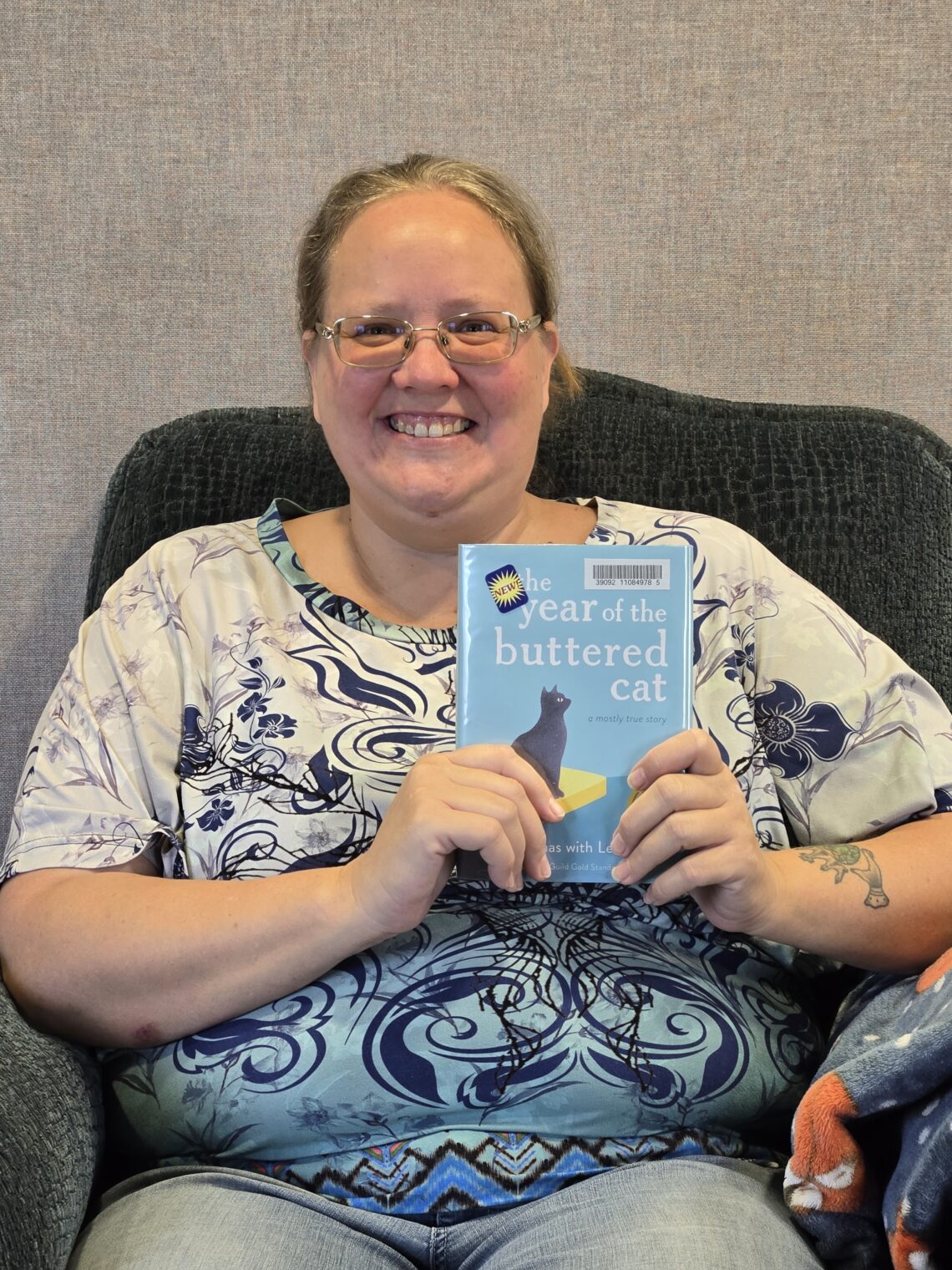
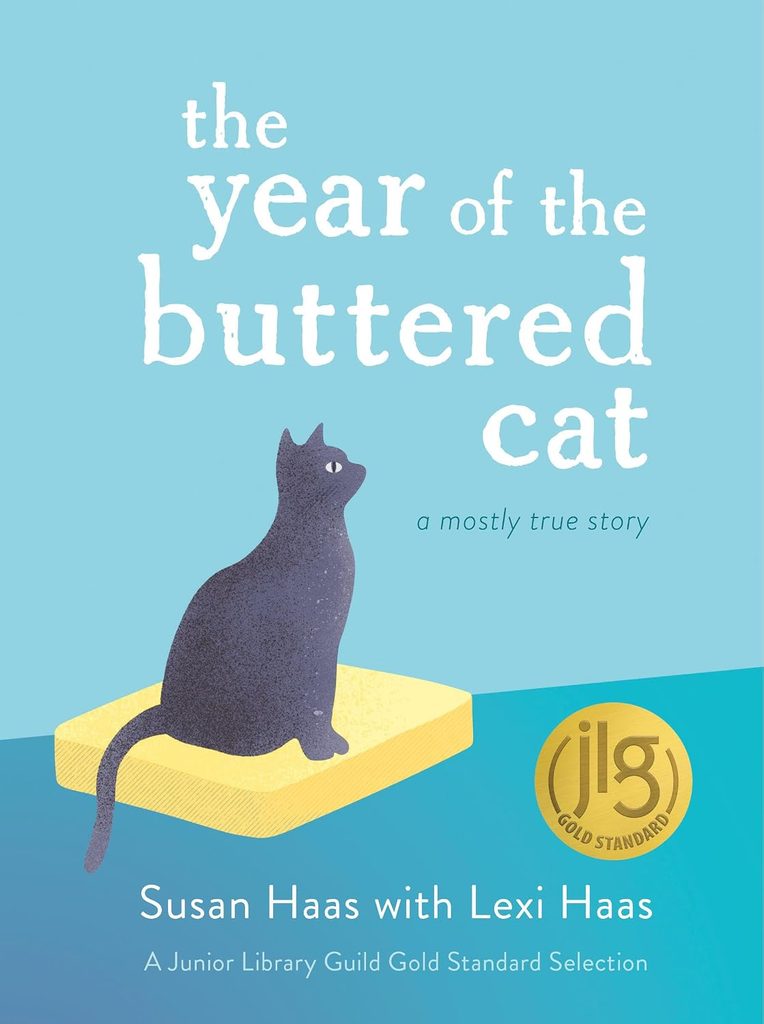
The Year of the Buttered Cat; a mostly true story
By Susan Haas with Lexi Haas
Lexi Haas tells us of her childhood, specifically the year she was five, dubbed, Year of the Buttered Cat, while she is awaiting to go into her second brain stimulation surgery. Lexi faced a terrible incident right after she was born, causing her to lose control of her voice and her body’s ability to move freely. With the surgeries, Lexi and her parents are hoping she will gain some control over her speech and movement. For much of the book, Lexi patiently, sometimes impatiently, waits for her “missing” body to come in, alternating between memories from when she was five and her current thoughts at thirteen. While adults know and understand that you only get one body and that’s it, many children born ill or with disabilities don’t understand that concept. Lexi, at age five, was one who thought she would get a brand-new body. Lexi was working on solving many different mysteries and one of them was what happened to her “missing” body.
During the Year of the Buttered Cat, Lexi, age 5, was desperate to find her “missing” body so she could run, jump, and do cartwheels like her siblings. She also wanted to be able to speak freely on her own. Her parents kept what happened very hush-hush, but Lexi was very determined. While she had no voice, she used magnets on a sheet to try to write out what her thoughts were. After starting the search for what happened to her body, Lexi met a mysterious stranger who claimed she had five gifts. Being homeschooled meant she had plenty of time to recruit sibling help in her investigation. Lexi also recruited her friends from French class to aid in her investigation. Yes, Lexi, unable to speak, learned to read, write and think in French.
With additional mysteries, such as a missing cat turning up buttered, and friends’ disappearances from her life, Lexi’s investigative skills and her imagination stayed busy, providing readers with an entertaining story. Lexi mixes her memories of being five with her current thoughts about her brain surgery. Lexi’s dislike for doctors, needles and specialists shows clearly. But her determination to gain as many skills, or gifts, as she can, keeps her going to them.
This is a great story for helping kids and teenagers learn about the difficulties of being physically limited, showing the patience of friendship, and the kindness kids have. It’s also great for adults with chronic conditions, as it helps you feel less alone hearing about others struggling with doctors and specialists. While this book is largely positive and uplifting, it also shows the struggles and depression that comes with chronic illness and life-long conditions that many face.